How Much Modular Homes Cost in 2026, From Base Price to Move-In
A modular home cost estimate should account for more than the advertised base price. The home itself is only one part of the budget. Buyers also need to plan for land preparation, foundation work, delivery, setup, utility connections, permits, inspections, and final finish details.
That’s the difference between comparing a home price and understanding a move-in budget. For buyers working with Next Modular, the right starting point is simple: confirm what’s included, what’s estimated, and what depends on the property.
TL;DR: In 2026, a modular home budget should include the factory-built home plus the work needed to place it, connect it, finish it, and make it ready to live in. National cost guides commonly put full-project pricing around $80 to $175 per square foot, but your final number can change based on the land, foundation, utilities, permits, delivery, setup, finishes, and local requirements.
The biggest pricing mistake is comparing base home prices as if they represent the full build. With Next Modular, buyers should first confirm whether they’re looking at Home-Only pricing or a Turn-Key project path, then build the estimate around the actual property, home design, and scope of work.
What modular homes cost in 2026
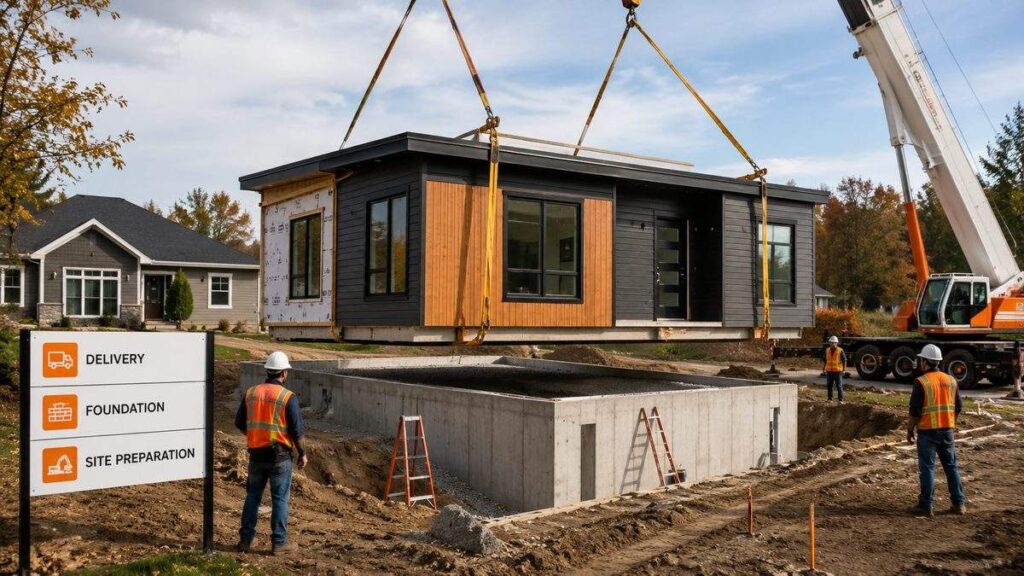
A modular home in 2026 commonly falls between $80 and $175 per square foot when broader project costs are included. That range is useful as a starting point, but it only helps if you know what the quote covers.
What the national price ranges usually include
Some price ranges include the factory-built home, delivery, setup, and basic site work. Others reflect only the base home before foundation work, utility connections, permits, inspections, and final finishing.
That’s why a lower number is not always the better comparison. It may be accurate for the home itself, but incomplete as a move-in budget.
Why your actual quote may look different
Your final modular home price can change based on square footage, layout, foundation type, site access, utility needs, finish selections, location, and service scope.
A Home-Only price and a Turn-Key estimate may both be valid, but they answer different questions. One focuses more narrowly on the home, while the other can account for more of the work needed to complete the project where that service is available.
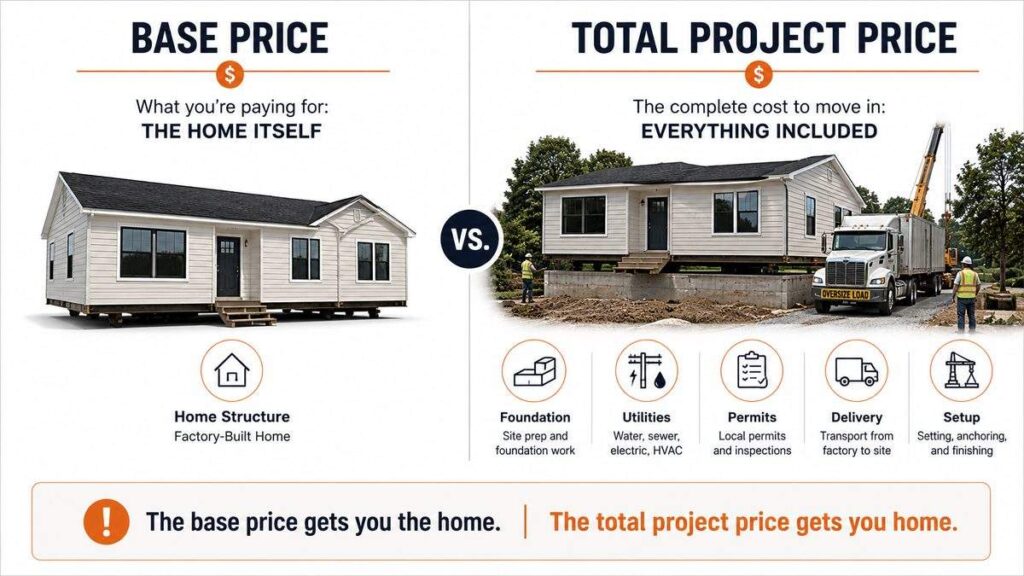
The base price isn't the full project cost
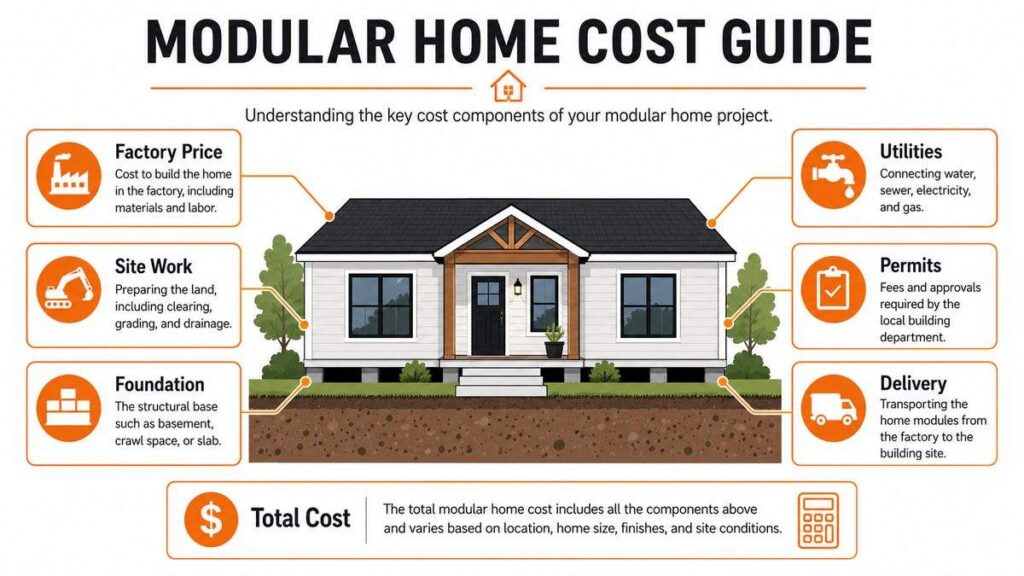
The base price is the cost of the modular home before the rest of the project is added in. It’s a useful starting point, but it shouldn’t be treated as the full move-in budget.
Factory-built home price
The factory-built price usually covers the home structure, standard materials, basic finishes, cabinets, doors, trim, windows, plumbing fixtures, electrical fixtures, and other items completed before the home leaves the factory.
With Next Modular, Home-Only pricing focuses on the completed home built to standard specifications. Delivery, setup, foundation, utilities, permits, and site work can still vary by project and location.
Total project price
The total project price is what buyers should use for move-in planning. It may include delivery, setup, foundation work, site preparation, utility connections, permits, inspections, finishing work, and optional upgrades. That’s why two similar homes can show very different numbers online.
What changes the modular home's final price
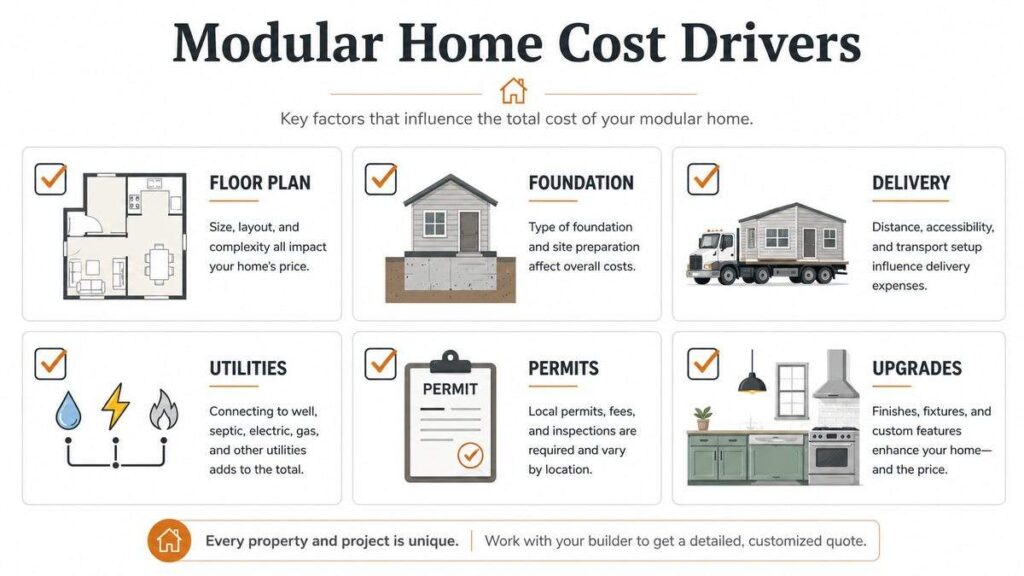
A modular home’s final price depends on the home you choose, the land it will sit on, and the work needed to make it move-in ready. The home itself is a major cost, but the site, foundation, utilities, delivery, permits, finish choices, and service path can all change the final number.
Home size and floor plan
Larger homes usually cost more because they require more materials, more modules, and a larger foundation. A simple ranch layout is often easier to price than a multi-section home with a complex roofline, added rooms, or major floor plan changes.
Site work, foundation, and local requirements
The property can affect the budget before the home ever arrives. A flat, accessible lot is usually more predictable than a wooded, sloped, wet, or hard-to-reach site.
Key cost factors can include:
- Foundation type, such as slab, crawl space, or basement
- Grading and drainage, plus soil conditions
- Delivery access for trucks, cranes, and equipment
- Utility connections for water, sewer or septic, electric, and gas or propane
- Permits and inspections, tap fees, and local building rules
Delivery, finishing, and upgrades
Delivery distance, crane needs, setting work, section connections, exterior details, trim, and final inspections can all affect pricing. These items are especially important when comparing a Home-Only quote against a fuller project estimate.
Finish selections and add-ons can also move the price up or down. Common variables include cabinetry, flooring, appliances, countertops, roofing, porches, decks, garages, concrete driveways, and landscaping.
Example budgets make the range easier to understand
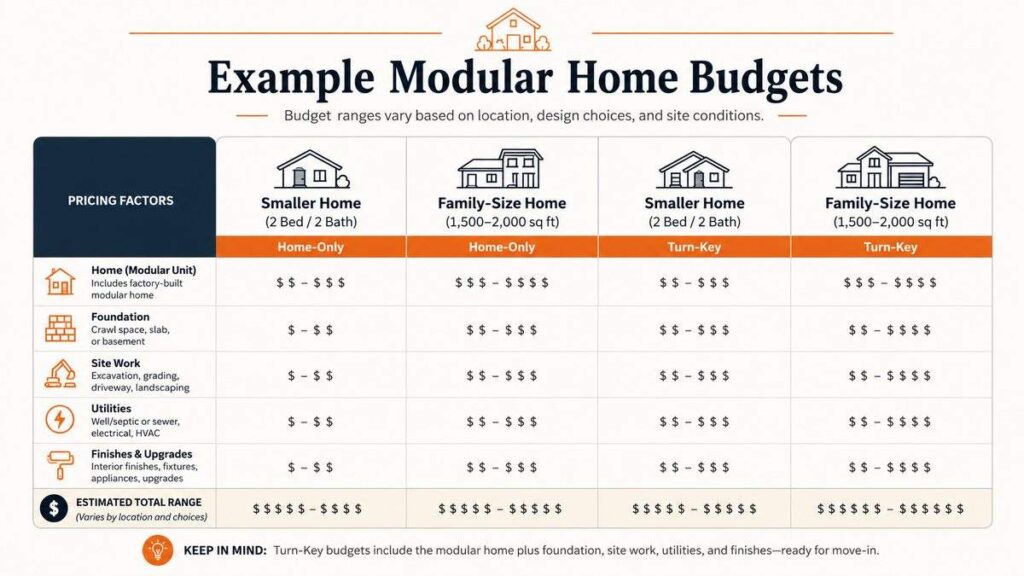
Broad modular home cost ranges are easier to compare when you look at two things separately: the size of the home and the scope of the project. A smaller home on a simple lot may stay closer to the lower end of the range, while a larger home with a basement, longer utility runs, or more upgrades can move higher quickly.
A smaller 2-bedroom, 2-bathroom modular home
A 2-bedroom, 2-bathroom modular home can make sense for first-time buyers, retirees, downsizers, or vacation properties. The price range for this type of home can still vary because different quotes may count different pieces of the project.
One number may reflect the base home. Another may include delivery and setting. A fuller estimate may also account for the foundation, utility connections, permits, site preparation, and finishing work.
A 1,500- to 2,000-square-foot modular home
A 1,500- to 2,000-square-foot home is a common family-size range, but square footage alone doesn’t tell the whole cost story. The final budget depends on the floor plan, property conditions, foundation type, finish selections, and how much work is included after the home is delivered.
| Budget factor | Lower-cost scenario | Higher-cost scenario |
|---|---|---|
| Foundation | Simple slab or crawl space | Full basement |
| Site work | Clear, level lot | Sloped or wooded lot |
| Utilities | Nearby connections | Well, septic, or long runs |
| Finishes | Standard selections | Premium upgrades |
Home-Only vs. Turn-Key pricing
With Home-Only service, Next Modular builds, delivers, and sets the home, while the buyer generally manages site work, permits, utilities, and related coordination. This can work well for buyers who already have contractors or want to manage more of the project themselves.
With Turn-Key service, where available, Next Modular coordinates more of the build through final inspections. That path can be a better fit for buyers who want help managing the broader project, not just the home order.
Financing depends on home type, foundation, and scope
Financing is tied to how the home is built, how it will be placed, and what the lender is being asked to finance. A lender may look at the home itself, the land, the foundation, utilities, site work, and the full project contract before approving a loan.
Modular homes and traditional mortgage options
Modular homes are built to state and local building codes and do not have a permanent chassis. When they’re properly placed on an approved foundation, they’re generally treated more like site-built homes by lenders and insurers.
That can make traditional mortgage financing possible, depending on the borrower, property, lender requirements, and project details.
Mobile homes and different loan paths
Mobile homes are built to HUD Code and include a permanent steel chassis. Their financing path can differ based on the foundation, land ownership, home placement, and lender.
Depending on the setup, buyers may use chattel loans, manufactured home loans, or conventional mortgage options if the home is placed on a permanent foundation.
Construction loans and project timing
A new modular home project often requires a construction loan because the home and site work are completed in stages. The financing plan should reflect the full build scope, not just the factory-built home price.
Next Modular may help buyers connect with lenders familiar with mobile and modular home financing. Loan options and approval still depend on the buyer, lender, home type, property, and project scope.

How Next Modular helps buyers price the project clearly
At Next Modular, our team looks at the home, the land, and the work needed to move the project from early planning to final inspections. A realistic modular home estimate depends on the full scope, not just square footage or the selected floor plan.
Feasibility study before ordering
Before a home is ordered, Next Modular conducts a feasibility study to review key project details. This can include zoning, permitting constraints, site conditions, property access, budget alignment, and preliminary site-work costs.
That review helps buyers identify potential cost factors earlier, before they commit to a home order or move too far into the process.
Customization with budget control
Buyers can customize floor plans and finishes, with features priced individually. That makes it easier to weigh choices like flooring, cabinetry, porches, garages, and other upgrades against the overall budget.
It also helps buyers separate must-have features from items that can be adjusted, delayed, or removed to keep the project closer to the target number.
Local guidance and service availability
Turn-Key service is available in many areas where Next Modular has local Project Managers. Home-Only service has broader availability for buyers who want to manage site work, permits, utilities, and local coordination themselves.
Availability can still vary by location, home type, manufacturer, and project scope. The best next step is to confirm the service path before treating any estimate as complete.
What should you do next?
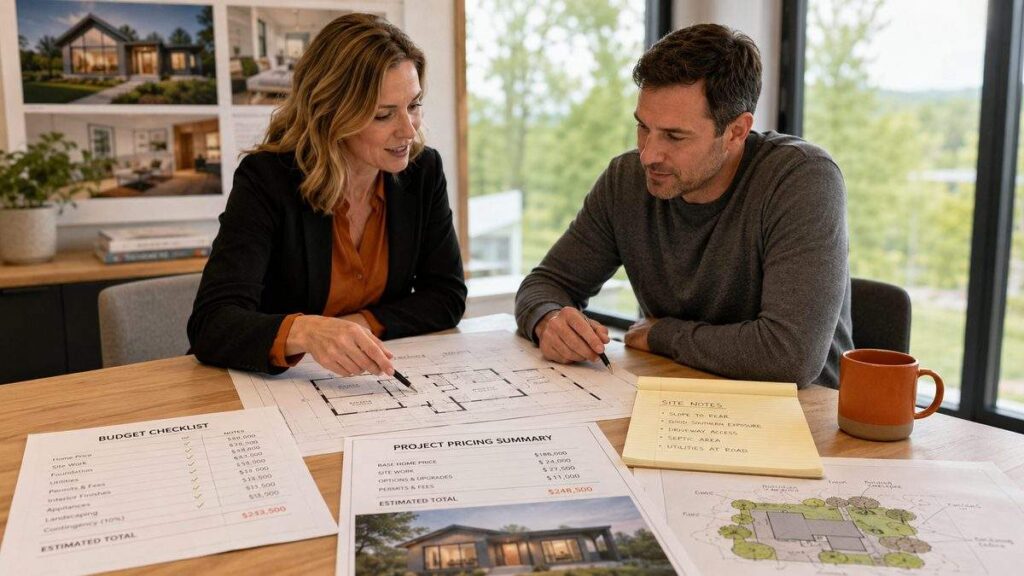
Before you compare final numbers, narrow the project down to the home, the service path, and the property details. That gives you a much cleaner starting point for pricing.
Compare floor plans before comparing prices
Start by looking at modular home floor plans that match your household, land, and must-have features. Once the layout is clearer, it’s easier to understand which costs come from the home itself and which costs come from the site.
Confirm which service option fits your project
If you already have contractors or want to manage more of the work yourself, Home-Only modular homes may be the better fit. If you want more help coordinating the build, ask whether Turn-Key modular home service is available for your location.
Ask for a project-specific estimate
For a project-specific estimate, contact Next Modular, call (574) 334-9590, or email [email protected].
Share your floor plan preferences, property details, and service questions so the conversation starts with the right scope.

Frequently asked questions:
In 2026, a modular home commonly ranges from about $80 to $175 per square foot when broader project costs are included. Your final price depends on the design, foundation, site work, utilities, delivery, permits, and upgrades.
The base price usually covers the factory-built home structure, standard materials, basic finishes, and many interior components completed before delivery. It typically does not cover the full site-related work needed for move-in.
Advertised prices often focus on the home itself. The final cost may also include foundation work, utilities, delivery, setup, permits, inspections, finish work, and property-specific site preparation.
Site work and foundation costs depend on the property. Grading, drainage, soil conditions, utility access, foundation type, and delivery access should be reviewed early so the estimate reflects the actual build site.
Home-Only is for buyers who plan to manage more of the site work and local coordination themselves. Turn-Key service, where available, includes broader project coordination through final inspections and handoff.
Yes. Modular homes are built to state and local codes and may qualify for traditional mortgage financing when properly placed. Lender requirements still depend on the borrower, property, foundation, and project details.
Not always. Mobile homes are built to HUD Code and include a permanent steel chassis. Financing may involve chattel loans, manufactured home loans, or conventional mortgage options depending on placement, foundation, and land ownership.
Commonly overlooked costs include permits, utility connections, well or septic work, delivery distance, crane needs, inspections, exterior finishing, porches, garages, decks, driveway work, and property-specific site preparation.
Yes. Upgrades such as porches, garages, cabinetry, flooring, countertops, roofing, decks, concrete driveways, and landscaping are usually priced individually. These choices can change the final project budget.
Next Modular uses a feasibility study to review zoning, permitting, site access, budget alignment, and preliminary site-work costs before ordering. That helps buyers better understand the project scope before moving forward.