Prefab Homes vs. Modular Homes: Which Path Fits Your Project?
Many buyers compare prefab homes and modular homes as if they’re separate categories, but the terms overlap. A modular home is a type of prefab home built in factory-made sections, delivered to the property, and set on a foundation.
That distinction matters because “prefab” can describe several building paths, not one specific home. This guide explains the terms, compares the main options, and shows where Next Modular may fit if you’re planning a customizable factory-built home.
TL;DR: Prefab home is the broader term. Modular homes are built off-site as complete sections, delivered to the lot, and assembled on a foundation. The better question isn’t prefab or modular, it’s which factory-built path fits your budget, land, timeline, and support needs.
What prefab means in home construction
Prefab homes are homes, sections, or building components made off-site before they’re delivered for placement or assembly. The term does not refer to one home type. It refers to the way part or all of the home is built.
Prefab is the broader category
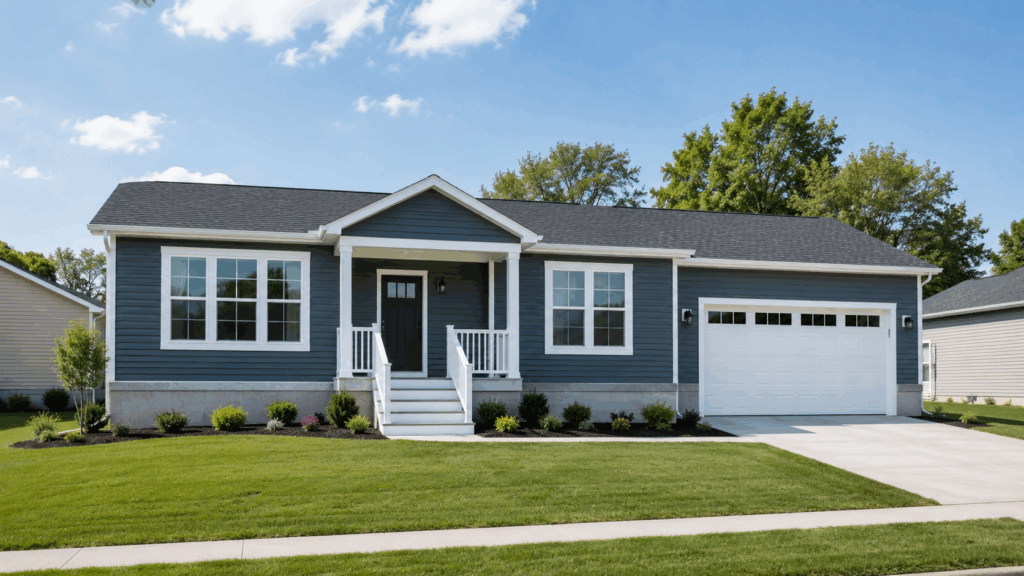
Prefab can include several building paths, including modular homes, panel-built homes, kit-style homes, and manufactured or mobile homes.
They all involve off-site construction, but the details vary. The real differences come down to how the home is built, delivered, installed, financed, and inspected.
Why the term causes confusion
The confusion usually comes from how broadly people use “prefab.” In one conversation, it may mean a modular home. In another, it may mean panels, a kit, or a manufactured home.
For buyers, the better question is what type of prefab construction you’re actually comparing.
What makes a modular home different
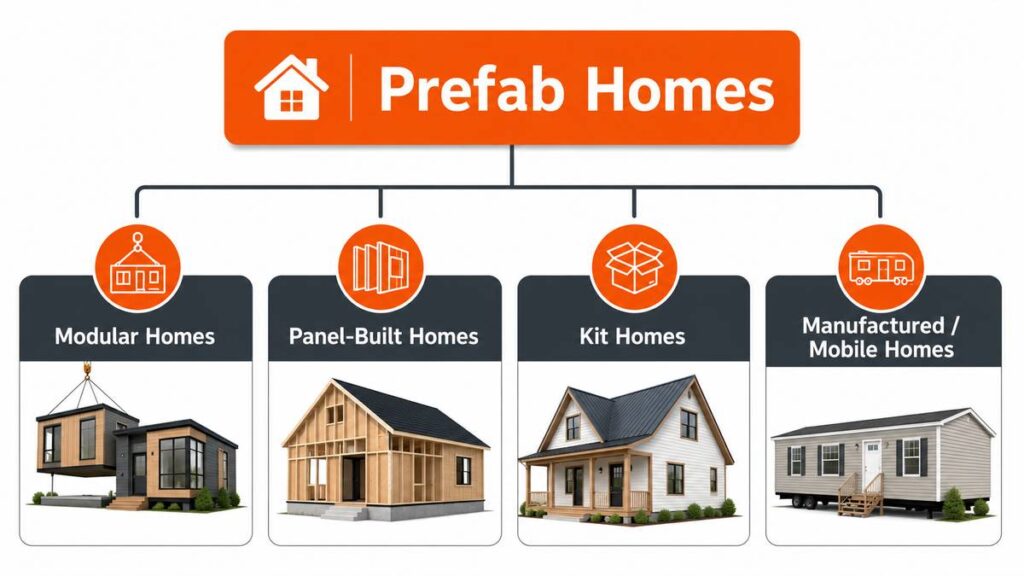
A modular home is a factory-built home made in complete sections, then delivered to the property and assembled on a foundation. It’s still prefab, but it follows a more specific construction, code, and installation path than the broader prefab home category.
Modular homes are built in complete sections
Instead of arriving as loose panels or a kit, modular homes arrive as finished modules. These sections are built indoors, transported to the lot, placed by crane, and joined together on-site.
After the home is set, crews complete the connection points, utilities, exterior details, and final finishing work.
Modular homes follow state and local building codes
A true modular home is built to state and local building codes, much like a traditional site-built home. It doesn’t have the permanent steel chassis used in manufactured or mobile homes. That difference can affect foundations, financing, insurance, and long-term resale expectations.
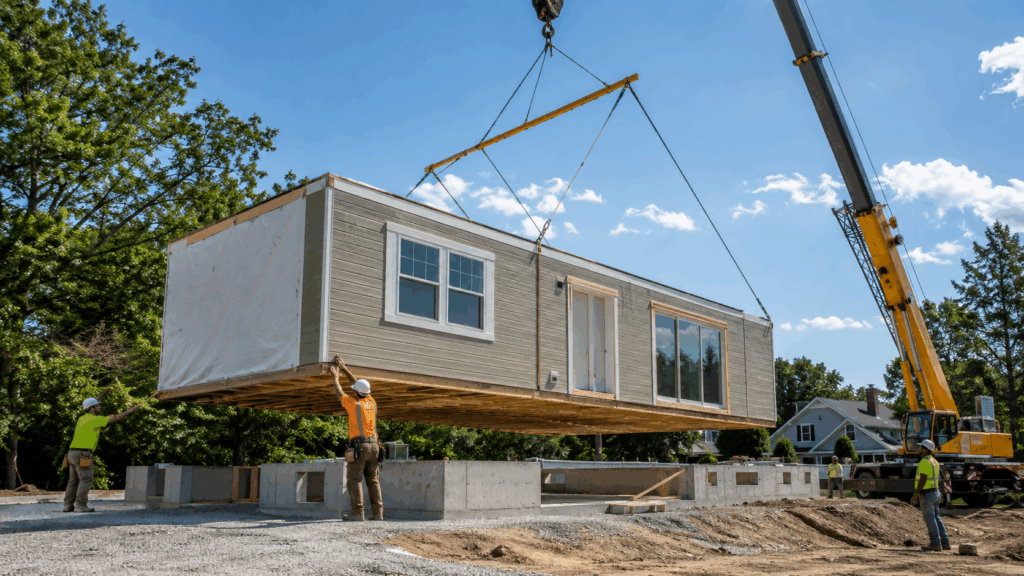
Compare the building paths side by side
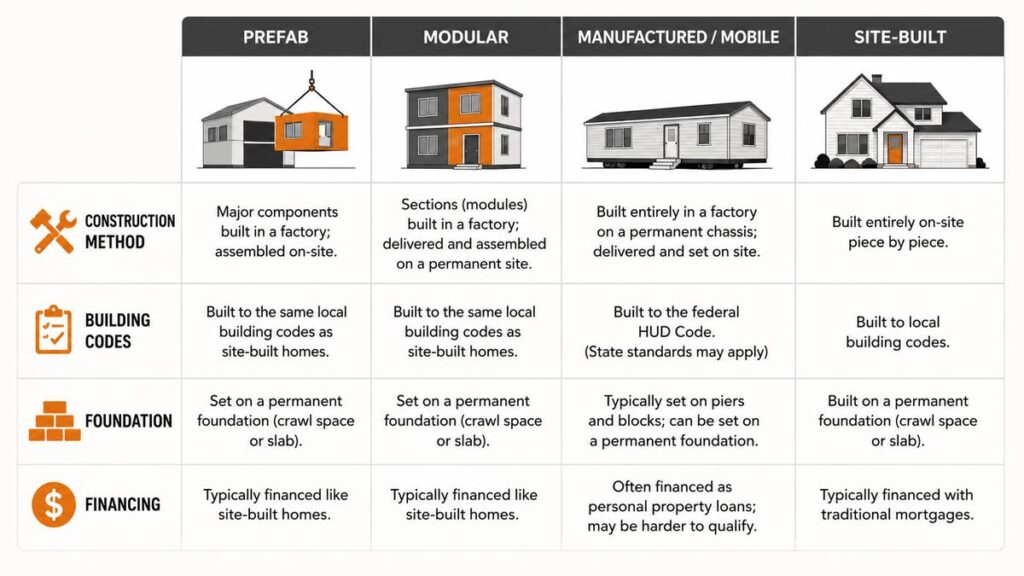
A clearer way to compare prefab homes and modular homes is to separate the construction method from the home category. Prefab describes off-site construction. Modular, manufactured, and some panel-built homes can all fall under that larger factory-built umbrella.
| Building path | Construction method | Codes and foundation | Financing and long-term value |
|---|---|---|---|
| Prefab homes | Broad category for homes or components built off-site, including panels, kits, modules, or manufactured sections | Varies by home type, local rules, and construction method | Depends on the specific home type, foundation, land ownership, and lender requirements |
| Modular homes | Built as complete factory-made sections, delivered to the property, and assembled on-site | Built to state and local building codes, set on a foundation, and built without a permanent steel chassis | Usually treated more like site-built homes by lenders and insurers, with stronger resale expectations |
| Manufactured/mobile homes | Built in a factory, delivered in sections, and designed with a permanent steel chassis | Built to federal HUD Code; foundation options can vary by project | Value and financing can depend heavily on land ownership, foundation type, and installation |
| Site-built homes | Built piece by piece on the property | Built to state and local building codes on a site-built foundation | Traditional financing and resale path, but timelines and costs can be less predictable |
Construction method
The main construction difference is how complete the home is when it reaches the property. Modular homes arrive as finished sections, while panel-built prefabs usually require more on-site assembly.
Codes and foundation
Code requirements affect permitting, inspections, foundations, insurance, and financing. A modular home is closer to a site-built home than a manufactured home on these points.
Financing and long-term value
For buyers, the takeaway is simple: compare the full project, not just the label. The home type, land, foundation, lender, and local requirements all shape the final path.
Why you should understand the difference before choosing
The label matters because it affects more than the build method. Your choice can shape the budget, timeline, financing path, site responsibilities, and how much coordination you’ll need before move-in.
Budget and timeline expectations
Factory-built construction can shorten the timeline because much of the home is made indoors before it reaches the property. It can also reduce some on-site labor needs and weather-related delays.
That doesn’t mean every cost is included in the home price. The final budget can still depend on the foundation, delivery, setup, utilities, permits, finishing work, and upgrades.
Site work and responsibility
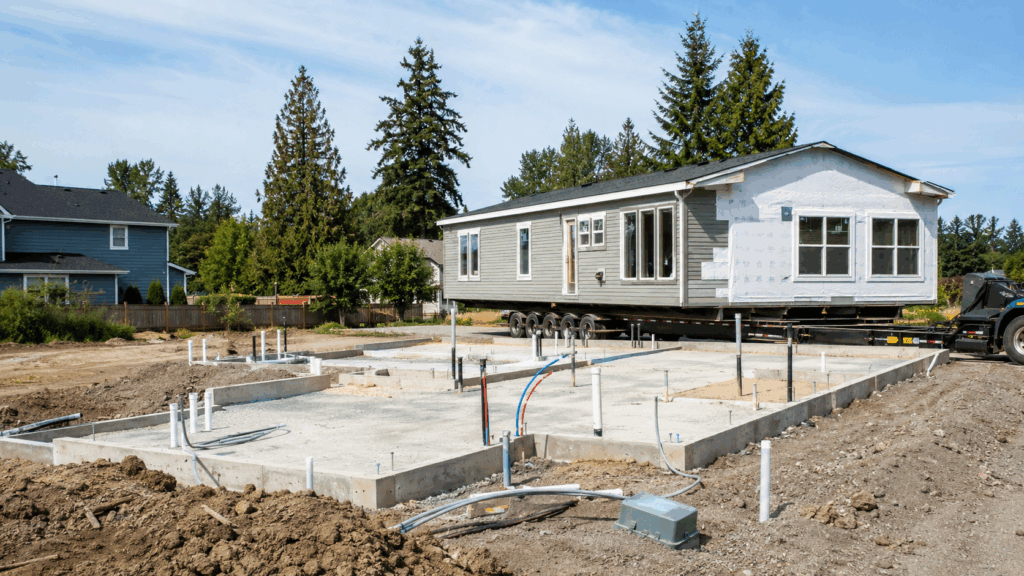
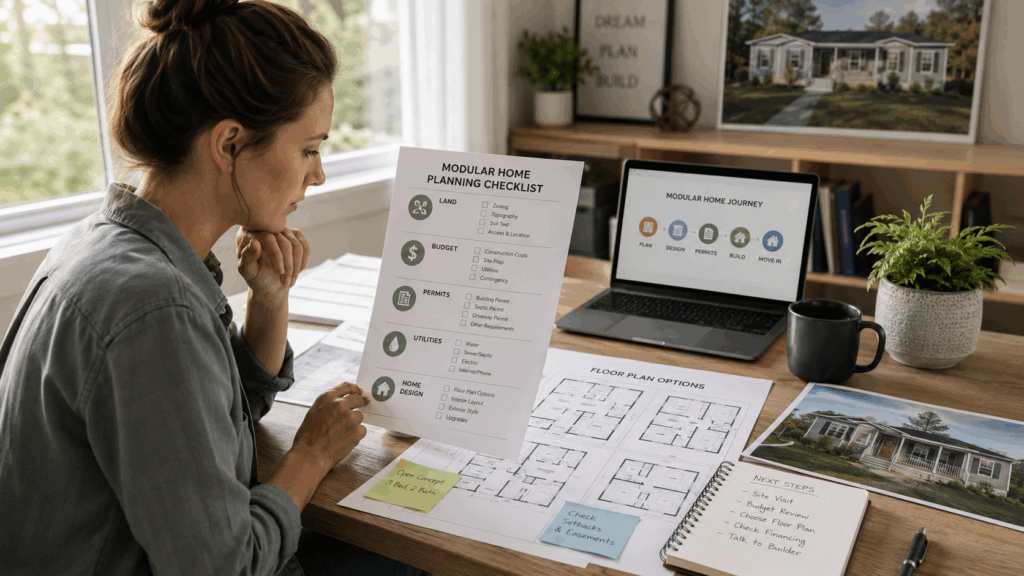
The home itself is only one part of the project. Before a modular home can be set, the land needs to be ready.
That may include:
- Permits
- Foundation work
- Water, electric, septic, or sewer connections
- Site access and grading
- Delivery and setup coordination
- Final inspections
Where does Next Modular fit into the decision?
Next Modular helps buyers compare factory-built homes by looking at the full project, not just the home style. That includes floor plan, budget, site work, service area, permits, foundation, utilities, and the level of project coordination the buyer wants.
Modular homes through Next Modular
Through Next Modular, buyers can explore customizable modular homes with factory-built precision and on-site completion. Floor plans and finishes can be adjusted around the buyer’s goals, budget, and project scope.
Next Modular serves buyers across the Midwest, with service availability depending on location and project type.
Home-Only and Turn-Key paths
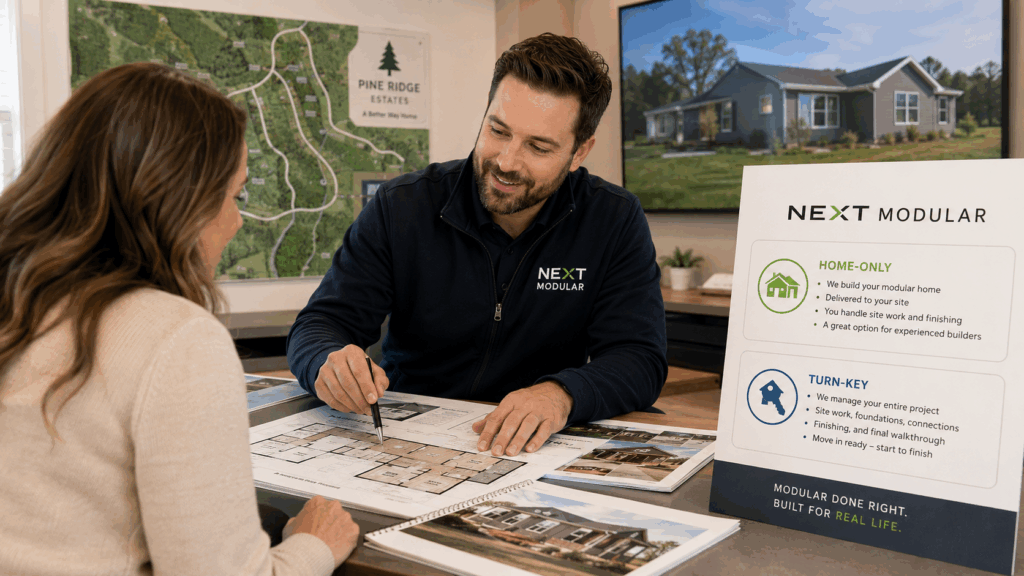
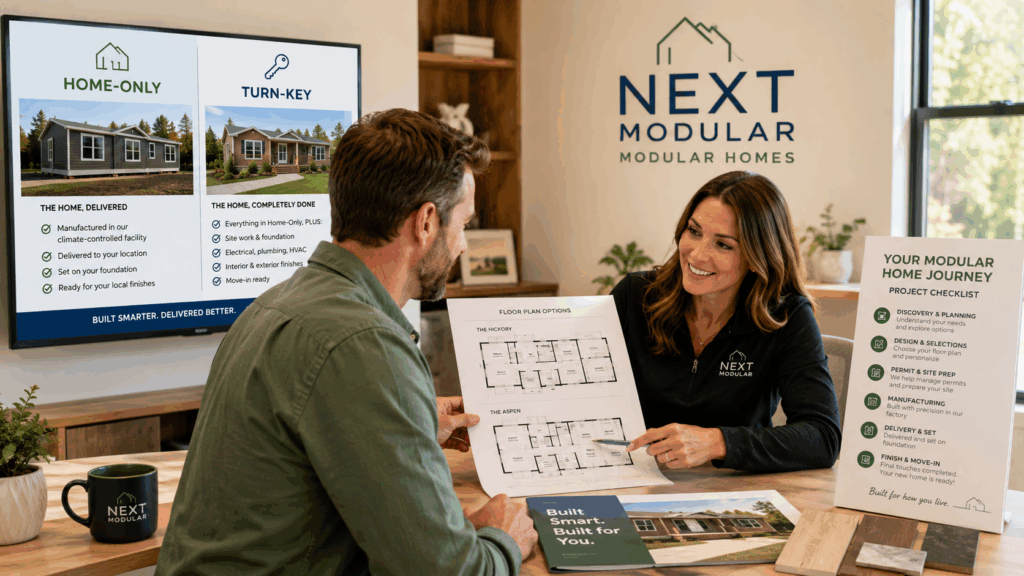
The two main service paths are Home-Only and Turn-Key.
Home-Only fits buyers who want the home delivered and set, while they manage site work, permits, utilities, and related coordination. Turn-Key service fits buyers who want Next Modular to coordinate the project from permits through final inspections, where available.
How to choose the right home-building path
The right choice depends on the full project, not just the home label. Before comparing prefab homes and modular homes, look at your budget, land, timeline, financing path, customization needs, and how much of the process you want to manage.
Choose based on the whole project
A modular home may be a strong fit if you want a factory-built home set on a foundation, built to state and local codes, and planned more like a traditional home project.
Ask these questions before choosing:
- Is the land ready for building?
- What permits, utilities, and foundation work are needed?
- Do local codes allow the home type you want?
- How much customization do you need?
- Do you want to manage contractors, or would you rather have more project coordination?
How should you move forward?
After sorting out the difference between prefab and modular, focus on the pieces that will actually shape your project: the home, the land, the service path, and the amount of support you want during the build.
Compare modular home floor plans
Start with modular home floor plans that match your household size, layout needs, budget, and long-term plans. The right plan gives the rest of the conversation a clearer starting point.
Review Home-Only modular homes
Look at Home-Only modular homes if you want the home delivered and set, but plan to handle site work, permits, utilities, and finishing through your own contractors.
Ask about Turn-Key modular home service
Ask about Turn-Key modular home service if you want more help coordinating the project where available, including permits, site prep, foundation work, utilities, setup, finishing, and inspections.
Contact Next Modular
To talk through the right path for your project, contact Next Modular, call (574) 334-9590, or email [email protected].
Bring your land details, timeline, budget range, and floor plan questions so the next step is grounded in your actual project.
Frequently asked questions:
Not exactly. Prefab homes are the broader category. Modular homes are one type of prefab home, built in factory-made sections before being set on-site.
Prefab can refer to several off-site building methods. Modular construction is more specific: complete modules are built in a factory, delivered, set, and joined on-site.
No. Modular homes follow state and local building codes. Manufactured or mobile homes follow federal HUD Code and include a permanent steel chassis.
Yes. Modular homes are built to the same state and local building codes that apply to site-built homes in the area.
Yes. Modular homes can often be customized through floor plans, finishes, layouts, and selected upgrades, depending on the manufacturer and the design.
It depends. Home type, site work, foundation, delivery, utilities, permits, finishes, and customization all affect cost. The label alone doesn’t determine the final price.
Timelines vary by project. Factory build time, permits, financing, site readiness, delivery, setup, finishing, and inspections all shape the final schedule.
Typical site work may include permits, foundation preparation, grading, access planning, utility connections, septic or sewer work, and inspection coordination.
Yes. Home-Only service is for buyers who want the home delivered and set while they manage the remaining site work and local coordination.
Turn-Key service can include permits, subcontractor coordination, foundation work, utilities, site preparation, setup, finishing, and final inspections where available.