Mobile Homes for Sale: A Buyer’s Guide to New vs. Used Homes
Comparing mobile homes for sale usually starts with one big question: should you buy new or used? Both can be smart choices, but they come with different costs, timelines, financing paths, customization options, and repair risks.
A new home may give you more control and fewer early surprises. A used home may lower the upfront price, but only if the condition, paperwork, site, and setup costs all check out.
TL;DR: New mobile homes are usually the better fit if you want customization, cleaner documentation, newer systems, and fewer early repair surprises. Used mobile homes can make sense when the lower price is backed by clean paperwork, a strong inspection, and confirmed placement. The real comparison is purchase price, site work, financing, repair risk, and project coordination.
First, know what "mobile home" means
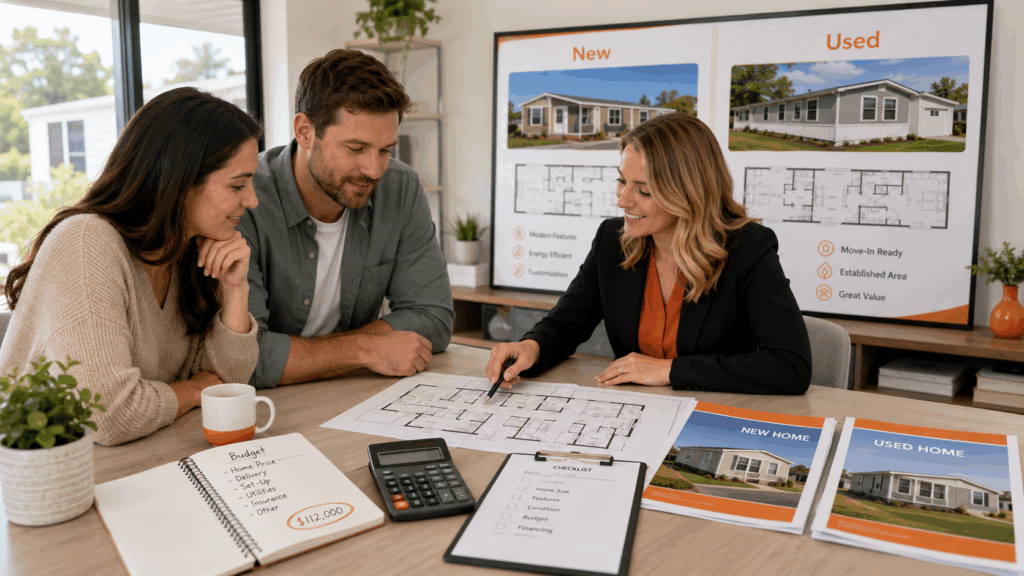
A mobile home is a common term for factory-built housing, but the details matter. Before comparing new and used options, confirm what kind of home you’re buying, how it was built, and what that means for placement, financing, and insurance.
Mobile homes and manufactured homes are often discussed together
Many buyers use “mobile homes” when they mean manufactured homes or factory-built homes more broadly. Next Modular offers mobile homes built to HUD Code standards, which are different from the state and local building codes used for modular homes.
Why HUD Code matters
HUD Code standards can affect how the home is inspected, titled, financed, insured, and placed. This is especially important with used homes, where documentation and condition need closer review.
Compare new and used mobile homes by the decision that matters
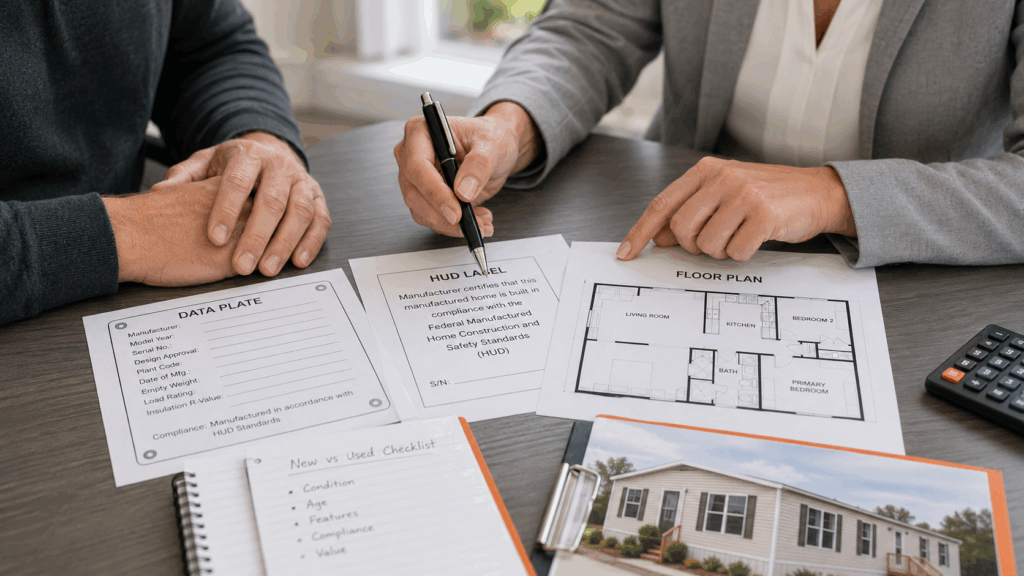
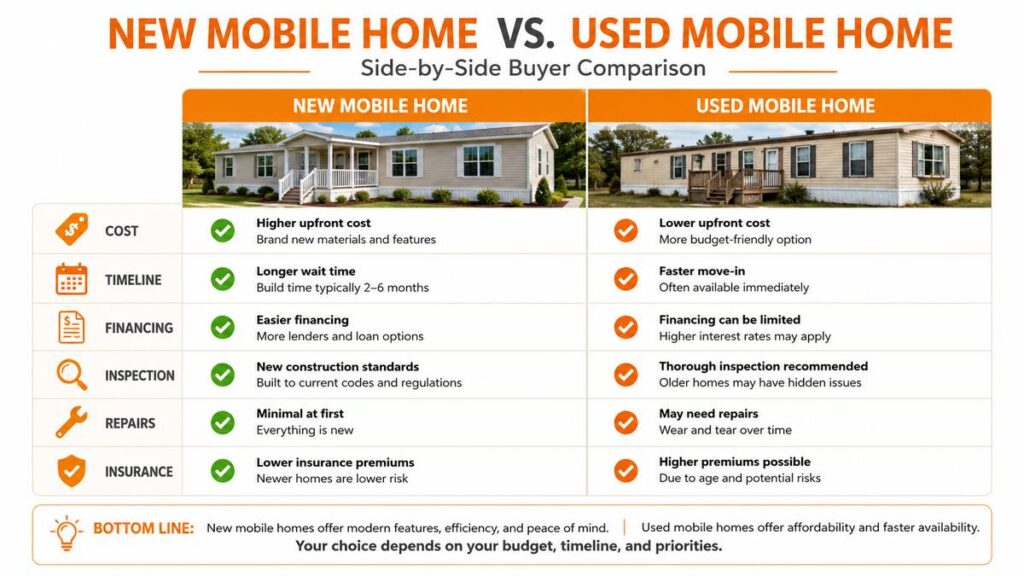
The best choice isn’t always the lowest price on paper. Compare new mobile homes and used mobile homes by cost, timing, condition, paperwork, financing, and how much uncertainty you’re comfortable taking on.
Upfront price vs. total ownership cost
Used homes often start with a lower sticker price, but repairs, setup, and financing terms can change the real cost. New homes may cost more upfront, but newer systems, clearer specifications, and fewer early repairs can make the full budget easier to plan.
Timeline and move-in readiness
A used home can move faster when it’s already placed, approved, and ready for occupancy. Ordering a new home takes more coordination, including delivery and setup, but it also gives you more control over the layout, finishes, and final result.
Customization, warranty, and repair risk
New homes give buyers more room to choose layouts, finishes, and features, along with clearer warranty documentation. Used homes come with their existing condition, so check carefully for water damage, soft floors, roof issues, HVAC problems, and electrical concerns.
Financing and insurance
Financing and insurance are often cleaner with a newer home. Used homes may require closer lender review because age, condition, title status, foundation type, and placement can all affect approval.
Costs to verify before you choose new or used
The real cost of a mobile home is the home price plus the work needed to place it, connect it, finance it, insure it, and maintain it. A less expensive used home can still become pricey if the setup, repairs, or paperwork create problems.
One-time project costs
Before you compare final numbers, confirm what’s included in the quote or sale price.
| Cost area | What to verify |
|---|---|
| Delivery and setup | Transport, setting, leveling, anchoring, skirting, steps, and related setup work |
| Site work | Foundation or pad work, grading, drainage, driveway access, and land readiness |
| Utilities | Electric, water, sewer or septic, gas, trenching, and hookup distance |
| Permits and inspections | Local permit requirements, inspection steps, and possible re-inspections |
| Closing costs | Loan fees, title work, appraisal needs, and lender-required items |
Ongoing ownership costs
Your monthly budget should include more than the loan payment. Plan for insurance, property taxes, utilities, maintenance, and repairs. If the home is in a land-lease community, include lot rent and any community fees before deciding what’s affordable.
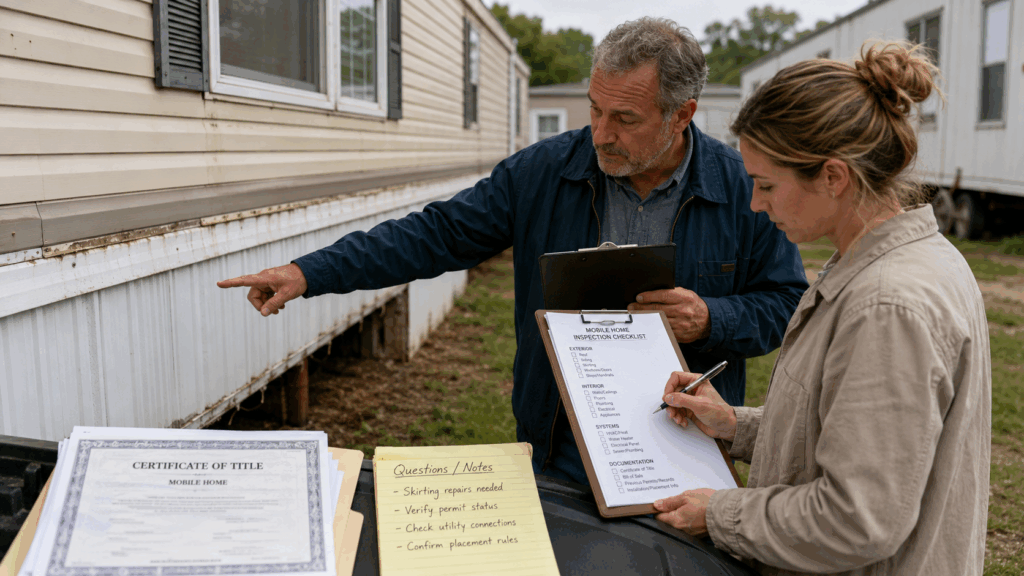
Used-home inspection and paperwork checks
Used homes need a closer look because condition and ownership issues can change the deal quickly.
Check:
- Ownership documents, title status, liens, unpaid taxes, or transfer issues
- HUD labels, data plate, serial number information, and required home documentation
- Roof, ceiling, window, wall, and floor condition, especially signs of leaks or soft spots
- Plumbing, HVAC, electrical panel, and major system condition
- Community approval, zoning, utilities, access, and permit requirements

When a new mobile home makes more sense
A new mobile home usually makes more sense when predictability matters more than the lowest upfront price. You’re starting with newer systems, clearer specifications, and fewer unknowns.
You want fewer early surprises
New homes are built to current standards and typically come with newer appliances, electrical systems, plumbing, HVAC equipment, and documentation. That can reduce the guesswork that often comes with a used home.
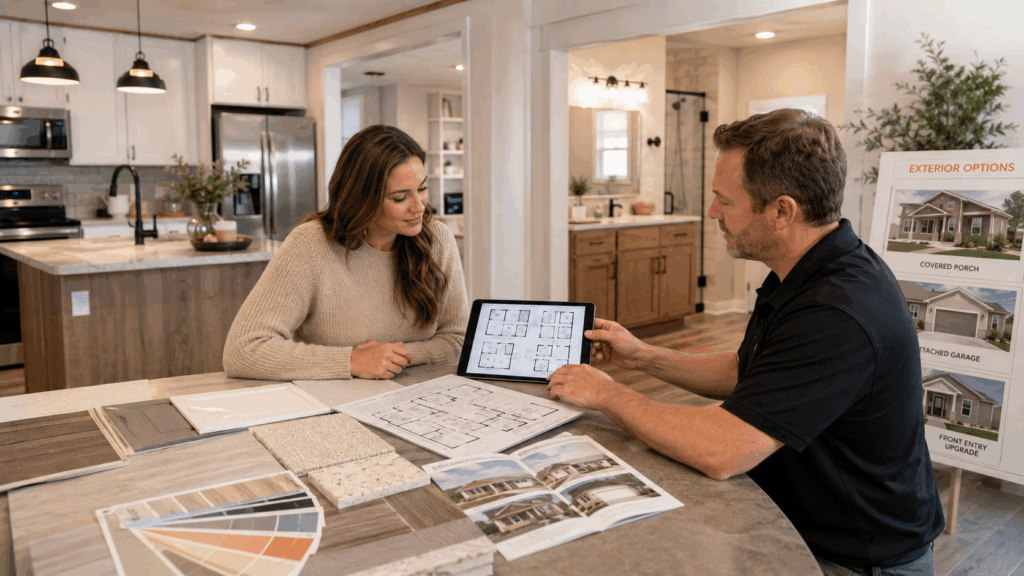
You want choices before the home is built
A new home may give you more choices around floor plans, finishes, kitchens, bathrooms, appliances, and decor selections. Depending on the project, you can also plan for site-built features like porches, garages, or decks.
When a used mobile home can still be a smart buy
A used mobile home can make sense when the condition is strong, the paperwork is clean, and the placement plan is confirmed. The savings only hold up if the home does not create expensive problems after purchase.
The lower price isn't the whole story
A used home may cost less upfront, but repairs, relocation, setup, and financing terms can change the final number quickly. Missing title details, liens, unpaid taxes, or unclear ownership can also delay or stop the purchase.
Placement must be confirmed first
Before committing, confirm community rules, zoning, utilities, road access, foundation needs, permits, and inspection requirements. A good used home only works if it can legally and practically go where you need it.
What comes next?
After comparing new and used homes, the next step is matching the right home to the right buying path.
Compare mobile home floor plans
Start with mobile home floor plans that fit your budget, household size, layout needs, and long-term plans.
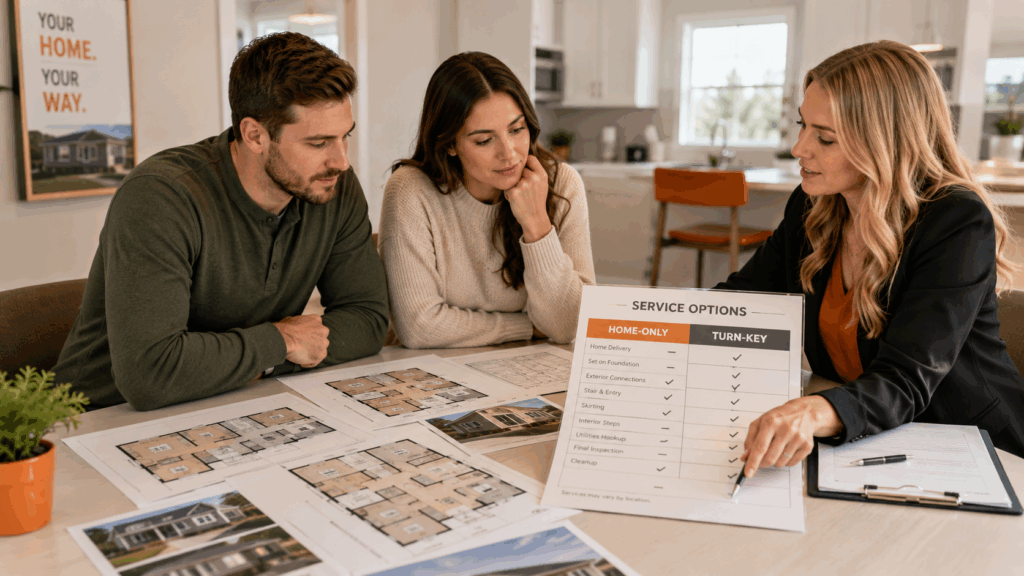
Review Home-Only service
With Home-Only service, Next Modular builds, delivers, and sets the home. You generally manage site work, permits, foundation, utilities, and local coordination.
Ask about Turn-Key service
With Turn-Key service, Next Modular can coordinate more of the project where available. Service depends on your location and local Project Manager coverage.
Contact Next Modular
To talk through new and used mobile home options, contact Next Modular, call (574) 334-9590, or email [email protected].
Frequently asked questions:
New mobile homes may be easier for first-time buyers who want clearer pricing, newer systems, and more guidance. Used homes can work when inspection, paperwork, placement, and financing all check out.
Not always. A used home may cost less upfront, but repairs, relocation, setup, financing terms, and documentation issues can raise the true cost.
Check the title, liens, HUD labels, data plate, roof, floors, plumbing, HVAC, electrical panel, windows, water damage, and placement approval before buying.
Sometimes. Financing depends on the home’s age, condition, title status, foundation, placement, and lender requirements. Older homes can be harder to finance.
New homes typically include warranty information for structural components, systems, appliances, or manufacturer-covered items. Review the exact warranty documents before purchase.
The listed price may not include delivery, setup, foundation, grading, utilities, permits, inspections, upgrades, closing costs, insurance, or site-specific work.
It can help if the home, land, utilities, permits, and title are all in order. Still confirm condition, zoning, financing, and ownership details.
New mobile homes may allow decor, finish, appliance, and layout choices depending on the model. Used homes are limited to their existing condition unless renovated.
Mobile homes are built to HUD Code standards and include a steel chassis. Modular homes are built to state and local building codes and do not have a permanent chassis.
Choose Home-Only if you want to manage site work, permits, foundation, and utilities. Ask about Turn-Key if you’re within the service area and want more project coordination.