Planning Rooms and Interior Space in a Modular Home: Offices, Mudrooms, Utility Spaces, and More
Planning rooms and interior space in a modular home starts with the layout itself. The goal is to create a home with the right balance of shared space, private areas, storage, and flexible rooms such as a home office, mudroom, or utility space.
At Next Modular, we start thinking through those decisions early. Room count, traffic flow, storage, and daily function all shape how a floor plan comes together.
TL;DR: Planning rooms and interior space in a modular home starts with the layout itself. This page explains how to think through flow, storage, shared and private zones, and practical spaces like a home office, mudroom, utility area, or flex room so the floor plan works in everyday life.
In this guide:
- What room and interior space planning actually means in a modular home
- Plan circulation and zoning before you plan finishes
- Build the main rooms around everyday use
- Make room for the spaces you will actually use
- Use interior space wisely, even in a smaller footprint
- Frequently asked questions
- Talk through your floor plan with Next Modular
What room and interior space planning actually means in a modular home
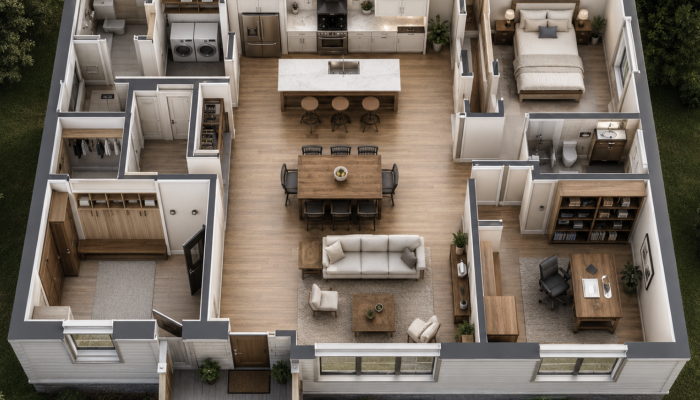
Space planning in a modular home means organizing rooms, walkways, storage, and shared areas so the layout feels practical and easy to use.
It’s less about fitting in the highest possible room count and more about making sure each space has a clear purpose, feels easy to move through, and uses the available square footage well.
Why space planning matters as much as square footage
A larger layout does not automatically feel better. A home can have plenty of square footage and still feel awkward if traffic paths are tight, storage is limited, or rooms do not connect in a practical way.
Strong interior space planning comes down to flow, furniture placement, traffic routes, and how well each area functions.
Start with how your household actually lives day to day
Before choosing room types, start by thinking about your routine.
Consider where shoes and bags tend to land, where quiet work happens, how groceries move from the entry to the kitchen, and whether you need a mudroom, office, utility space, or flex room. That’s what helps turn a floor plan into a home that feels practical once you move in.
Plan circulation and zoning before you plan finishes
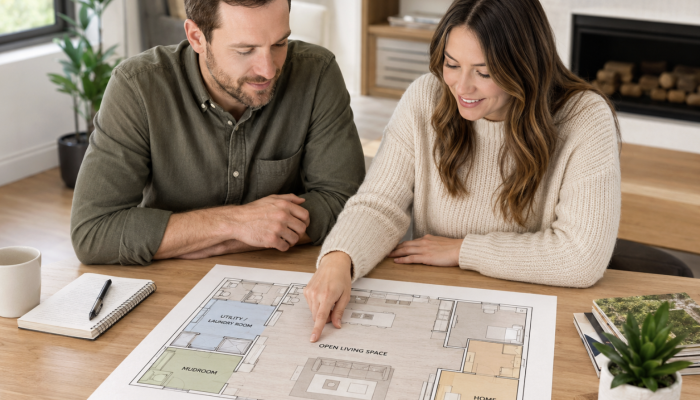
A good modular home layout starts with movement. Before choosing finishes, figure out how people will move through the home and which areas should feel shared or private. That work does more for daily comfort than paint or cabinet style.
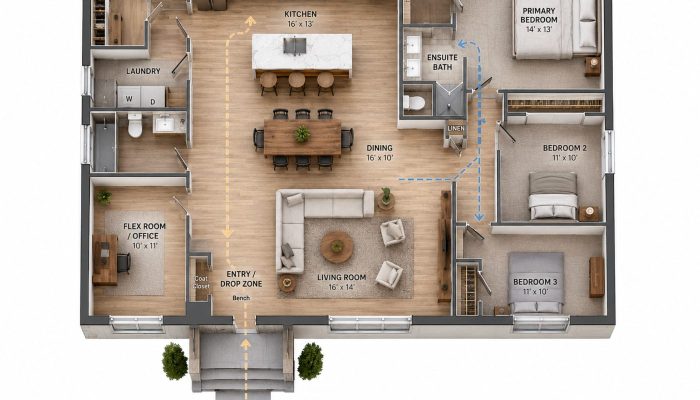
Map the routes you will use most
The key paths usually connect the entry, kitchen, living area, and bedrooms. If those routes feel tight or awkward, the whole layout can feel off. At Next Modular, we look for clear circulation and room connections that make the layout easier to use.
- Entry to kitchen with groceries
- Kitchen to dining area during meals
- Living area to bedrooms and bathrooms
- Main entry to drop zone or storage area
Separate shared and private spaces without wasted square footage
Living, dining, and entry areas usually work best as the shared side of the home. Bedrooms, bathrooms, and work areas usually need more privacy.
Smart placement can create that separation without adding dead hallway space or making the floor plan feel chopped up.
Build the main rooms around everyday use
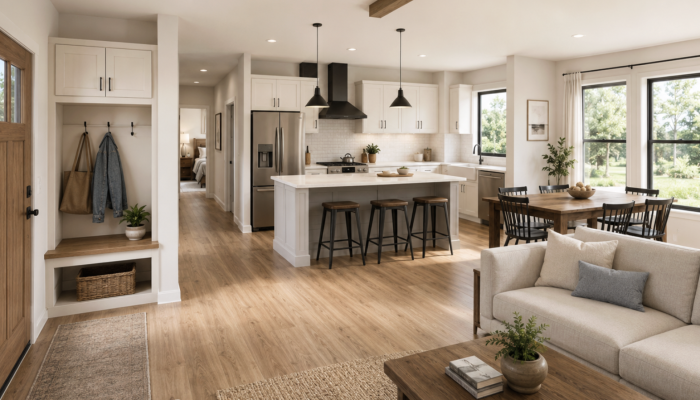
The best modular home layouts start with the spaces your household uses most. Instead of treating each room as a separate box to check off, it helps to look at how the main areas work together throughout the day.
- Kitchen, living, and dining areas: These spaces usually carry the most traffic, so they should connect naturally without feeling crowded. Clear walkways, practical seating, and storage that keeps clutter down all make a difference.
- Bedrooms and bathrooms: These rooms should feel quieter and more private, with enough storage and walking space to stay comfortable and easy to use.
- Entries and drop zones: A well-placed landing spot for shoes, coats, bags, and daily clutter helps keep mess from spreading into the rest of the home.
Make room for the spaces you will actually use
A strong modular home floor plan should do more than cover the basics. It should also make room for spaces tied to work, storage, laundry, and changing household needs.
Home office ideas for full rooms, hallway desks, and quiet nooks
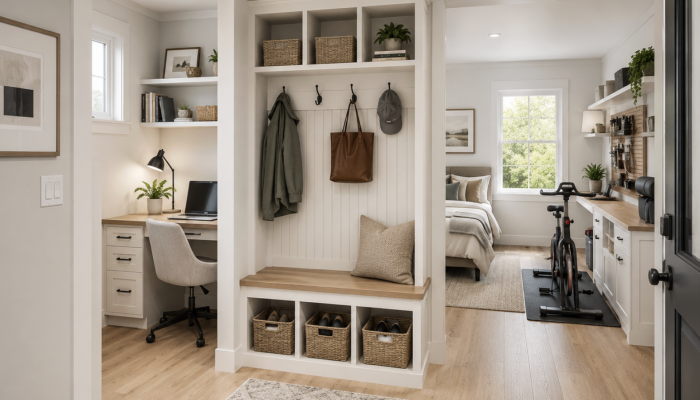
A home office does not have to be a full extra room. In some layouts, a compact study off a hallway, a recessed desk area, or a small workspace set apart from the main living space can work just as well.
What matters most is giving that area enough separation to stay functional without taking too much square footage from the rest of the home.
Mudrooms, laundry areas, and utility spaces that support real routines
A mudroom can make the rest of the home easier to manage. If the main entry is through a garage or side door, it gives shoes, coats, bags, and everyday clutter a defined place before it spreads into the kitchen or living area.
The same goes for laundry and utility spaces, which should be easy to reach, include useful storage, and support the way your household moves through the day.
Here’s how these spaces often function best:
| Space | Best use |
|---|---|
Mudroom | Shoes, coats, bags, pet gear, and a daily drop zone |
Laundry area | Routine chores without disrupting the main living spaces |
Utility space | Household supplies, storage, and support functions that keep other rooms clearer |
Flex rooms and bonus spaces that can change with your needs
A flex room gives the layout more long-term usefulness. It can start as a playroom, guest room, hobby space, or workout area, then shift as your needs change.
That kind of flexibility helps a home stay practical over time without locking every room into one fixed purpose.
Use interior space wisely, even in a smaller footprint
A smaller modular home does not have to feel cramped. Good interior space planning comes from using walls, windows, storage, and layout choices well so the home feels easier to live in, not just larger on paper.
Storage, built-ins, and furniture placement that reduce wasted space
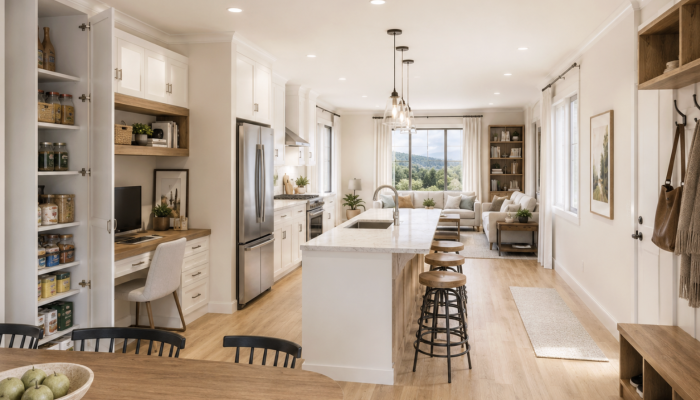
The best small-footprint layouts cut wasted space instead of chasing bigger rooms. That often means adding built-ins, using vertical storage, and placing furniture so walkways stay clear.
A pull-out pantry, a bench with hidden storage, or cabinetry that fits cleanly into the wall can do more for daily function than simply adding square footage.
Helpful ways to get more out of the layout include:
- Built-in shelving instead of extra freestanding furniture
- Vertical pantry or closet storage
- Storage benches at entries or mudroom-style zones
- Furniture scaled to the room so circulation stays open
Windows, light, and open sightlines that make rooms feel more usable
Natural light changes how a room works. Well-placed windows, open sightlines, and connected living areas can make smaller interiors feel calmer and more usable.
When you can see across the main spaces and bring in more daylight, the home feels less boxed in and easier to navigate.
Frequently asked questions:
1) How many rooms should a modular home have for the way you live?
The right room count depends on how you live day to day. We recommend planning around real routines, then making room for spaces like an office, mudroom, or flex room.
2) What is the best way to plan interior space in a modular home?
We start with movement, storage, and privacy. A strong layout should support daily routines, keep traffic paths clear, and give each space a clear job before finishes enter the conversation.
3) Can a modular home include a home office?
Yes. We can work a home office into the plan as a dedicated room, study nook, or compact workspace, depending on how much separation and square footage you want.
4) Can you add a mudroom to a modular home floor plan?
Yes, in many cases we can work a mudroom into the layout, especially near a garage or side entry where shoes, coats, bags, and everyday clutter tend to collect.
5) Where should a utility room or laundry space go in a modular home?
We usually recommend placing a utility room or laundry area where it supports daily routines, often near bedrooms, an entry, or beside a mudroom-style drop zone.
6) What is a flex room in a modular home?
A flex room is a space we plan to serve different uses over time. It can work as a playroom, guest room, hobby space, workout room, or home office.
7) Are open-concept modular homes always better for smaller layouts?
No. Open layouts can help a smaller home feel less closed in, but some households need more defined rooms for privacy, work, noise control, or better day-to-day organization.
8) How do you make a modular home feel bigger without adding square footage?
We look at built-ins, storage, window placement, and clear walkways first. Good sightlines, less clutter, and better furniture planning can make a home feel more open and usable.
9) What room-planning mistakes should buyers avoid in a modular home?
The most common mistakes are tight traffic paths, weak storage, oversized furniture plans, and rooms that sound useful on paper but do not work well in everyday life.
10) Can Next Modular customize room layouts and interior spaces?
Yes. At Next Modular, we offer customizable floor plans, built-ins, and layout options that support how you live. We also use our feasibility study to review site conditions, budget, and project scope early.
Talk through your floor plan with Next Modular
The right layout decisions are easier to make before your plan is finalized. At Next Modular, we help you compare floor plans, think through custom changes, and sort out the details before you move forward.
Ready to take the next step? Connect with our team here:
- Contact us: nextmodular.com/contact/
- Email: [email protected]
- Call: (574) 334-9590