When we talk about modular homes, people sometimes picture a double-wide sitting in a local mobile home park. If that’s what comes to mind, you’re not alone, but it does mean the differences between mobile, manufactured, prefabricated, and modular homes may need some clearing up.
Most of the confusion comes from the fact that people often use “modular home” and “manufactured home” interchangeably. The waters get even muddier when mobile homes, trailers, and prefabricated homes enter the conversation.
It’s true that modular homes are built in a factory, just like manufactured homes. However, there are important differences in how these homes are built, regulated, financed, placed, and customized. When we refer to modular homes on this page, we’re talking about homes built in factory sections to meet state and local building codes. These are not mobile homes, trailers, or manufactured homes.
A modular home may also be referred to as a prefabricated home, but “prefabricated” is a broader term that can include more than one type of factory-built home.
Quick answer: Modular homes are factory-built in sections, placed on a foundation, and built to state and local building codes. Manufactured homes are built to federal HUD Code standards and include a permanent chassis. “Mobile home” usually refers to pre-1976 factory-built homes, while “prefabricated home” is a broad term for homes built partly or fully off site.
Key takeaways
- Modular homes and manufactured homes are both factory-built, but they follow different building standards
- Manufactured homes are built to HUD Code standards and include a permanent chassis
- Modular homes are built to state and local codes and are placed on a permanent foundation
- The right choice depends on your budget, land, financing path, customization needs, foundation plans, and long-term goals
Last updated: May 2026 | Reviewed by: Next Modular team
What is a modular home?
A modular home is built in a factory in sections, usually to about 80–90% completion, and then transported to the building site. Unlike a manufactured home, a modular home doesn’t ship fully assembled and isn’t built on a permanent chassis.
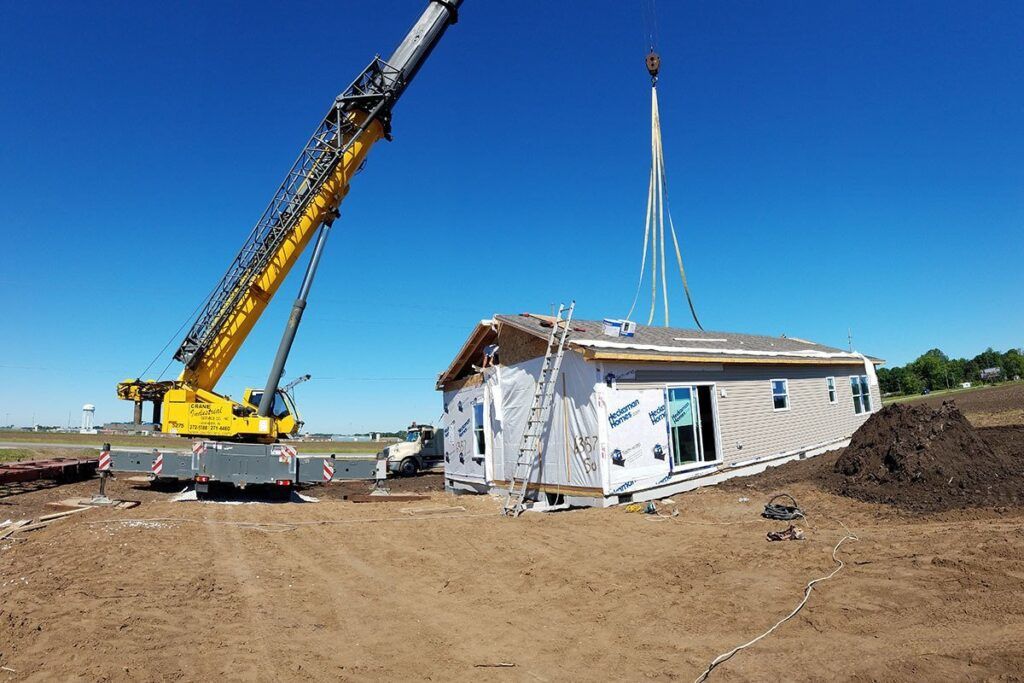
Once the modules arrive at the property, a crane sets each section onto the foundation. The remaining work is completed on site, including connections, finish work, inspections, and any project-specific details. When completed, a modular home can look and function much like a traditionally built home.
What sets modular homes apart?
Here are some of the main differences between modular homes and manufactured homes:
- Modular homes are built to state and local building codes, similar to traditional site-built homes, and are covered by a builder’s warranty
- They are placed on a permanent foundation, not a permanent steel chassis
- They are typically treated more like site-built homes by lenders and insurers, though financing still depends on the buyer, property, and loan program
- Their long-term value depends on the home, land, location, condition, and market, but they are generally evaluated more like traditional homes than manufactured homes
- They are inspected during factory construction and again as required during on-site completion
- They can offer more floor plan and customization flexibility than manufactured homes, depending on the manufacturer, budget, code requirements, and project scope
- Factory construction can happen while foundation and site work are being planned or completed, which may help organize the overall build process
- Energy performance depends on the home design, insulation, windows, systems, appliances, and selected options
Because modular homes are built in sections, the floor plan, foundation, site access, utilities, permits, and final inspections should be considered before the home is ordered.
What is a manufactured home?
A manufactured home is a factory-built home constructed to federal HUD Code standards. The term replaced what many people used to call “mobile homes” or “trailers” after national standards changed in 1976.
Unlike a modular home, a manufactured home is built on a permanent steel chassis. That chassis stays with the home as part of the structure, even if the home is placed on a foundation or set up for long-term residential use. Manufactured homes are transported to the site after factory construction and are often available as single-wide, double-wide, or multi-section homes.
Manufactured homes often have a lower starting price than modular homes, but they follow different building standards and may involve different financing, foundation, insurance, placement, and resale considerations. Customization is usually more limited than it is with modular homes, especially when it comes to structural changes or future additions.
What sets manufactured homes apart?
Here are some of the main differences between manufactured homes and modular homes:
- Manufactured homes are built to federal HUD Code standards, not state and local building codes
- They include a permanent steel chassis that remains part of the home
- They are inspected in the factory under HUD Code requirements
- They may be placed on private land, leased land, or in a manufactured home community, depending on zoning, site requirements, and local rules
- They can be placed on different foundation systems, but the right setup depends on the home, property, lender, and local requirements
- They are usually treated as a separate lending category from modular and traditional site-built homes
- They often allow finish and feature choices, but structural customization is typically more limited than with modular homes
- Long-term value depends on the home, land ownership, location, condition, financing structure, and local market
For many buyers, a manufactured home can be a practical option when affordability and a simpler model-selection process are the priority. The key is understanding that it isn’t the same as a modular home, even though both are built in a factory.
What is a mobile home?
A modular home isn’t a mobile home. Technically, the term “mobile home” refers to factory-built homes that were built before federal manufactured housing standards took effect in 1976.
Today, many buyers still use “mobile home” in everyday conversation when they mean a manufactured home. That’s common, but it can create confusion when comparing home types. A modern manufactured home is built to HUD Code standards, while a modular home is built to state and local building codes and placed on a foundation.
The distinction matters because the home’s age, building standard, chassis, foundation, financing path, insurance, placement rules, and long-term value can all affect the buying decision. When Next Modular uses the term “mobile home,” we’re generally referring to the common buyer-facing language for modern manufactured homes, not modular homes.
What does prefabricated home mean?
A prefabricated home, or prefab home, is any home built partly or fully off site before being transported to the property. It’s a broad category, not one specific home type.
Modular homes and manufactured homes can both fall under the prefab umbrella because both are built in a factory. The difference is how they’re built, what code they follow, whether they have a chassis, how they are placed, and how they’re usually financed.
That’s why “prefab home” can be helpful as a general term, but it doesn’t tell you enough on its own. If you’re comparing homes, confirm whether the home is modular, manufactured, or mobile before making decisions about land, financing, foundation, customization, and project scope.
Modular vs. manufactured vs. mobile vs. prefabricated homes
These terms are often used together, but they don’t mean the same thing. The biggest differences come down to building code, chassis, foundation, financing, customization, and how the home is treated after it is placed on the property.
| Home type | What it means | Building standard | What buyers should know |
|---|---|---|---|
| Modular home | A factory-built home constructed in sections, transported to the site, and placed on a foundation | State and local building codes | Often treated more like a traditional site-built home for financing, inspections, customization, and long-term planning |
| Manufactured home | A factory-built home constructed on a permanent steel chassis and transported to the home site | Federal HUD Code | Usually has a lower starting price than a modular home, but financing, foundation, placement, and customization may work differently |
| Mobile home | Technically, a factory-built home constructed before HUD Code standards took effect in 1976 | Pre-1976 mobile home standards | Many buyers still use “mobile home” casually, but modern homes in this category are usually manufactured homes |
| Prefabricated home | A broad term for a home built partly or fully off site before being transported to the property | Depends on the specific home type | Can include modular homes, manufactured homes, and other off-site construction methods, so the exact type matters |
Why these differences matter when buying a home
The difference between modular, manufactured, mobile, and prefabricated homes isn’t just a wording issue. It can affect financing, foundation requirements, inspections, placement, customization, insurance, and how the home fits your long-term plans.
A modular home is built to state and local building codes, so it is usually handled more like a traditional site-built home by lenders, insurers, appraisers, and local inspectors. Manufactured homes follow HUD Code standards, include a permanent steel chassis, and may involve different financing, foundation, placement, and appraisal considerations.
Before choosing a home type, look beyond the label. Ask how the home is built, what code it follows, what foundation it needs, how it can be financed, what customization is possible, and what local requirements apply to your property.
Is a modular or manufactured home the better fit?
The better fit depends on your budget, land, financing path, customization needs, and long-term goals. Both modular and manufactured homes can give buyers a more affordable path than many traditional site-built options, but they work differently.
A modular home may be a better fit if you want:
- A home built to state and local building codes
- A permanent foundation
- More floor plan and structural customization options
- A financing path that is often closer to traditional site-built homes
- A home that can be planned around specific land, design, and long-term use needs
But a manufactured home might be the right option if you want:
- A lower starting price in many cases
- A simpler model-selection process
- A single-wide, double-wide, or other manufactured layout
- A home that may work on private land or in a manufactured home community
- Finish and feature options without the same level of structural customization
If you’re still unsure, start with the decision that matters most: budget, land, financing, customization, or service path. Next Modular can help you compare modular home floor plans and mobile/manufactured home options so you can understand which direction makes sense before moving forward.
Frequently asked questions
Are modular homes and manufactured homes the same thing?
No. Modular homes are built in factory sections to state and local building codes. Manufactured homes are built to federal HUD Code standards and include a permanent steel chassis.
Is a modular home the same as a mobile home?
No. A mobile home technically refers to a factory-built home built before HUD Code standards took effect in 1976. Today, many people use “mobile home” to mean manufactured home.
What does prefabricated home mean?
A prefabricated home is any home built partly or fully off site before being transported to the property. Modular and manufactured homes can both fall under that broader category.
Which is better, modular or manufactured?
Neither option is automatically better. A modular home may fit buyers who want more customization, while a manufactured home may fit buyers who prioritize a lower starting cost.
Do modular homes have a permanent chassis?
No. Modular homes are transported in sections and placed on a foundation. Manufactured homes include a permanent steel chassis that stays with the home.
Are modular homes easier to finance than manufactured homes?
Modular homes are often financed more like traditional site-built homes, but approval still depends on the buyer, property, lender, and loan program. Manufactured homes may follow different lending requirements.
Can manufactured homes be placed on private land?
Manufactured homes can often be placed on private land. However, before placement, zoning, permits, foundation requirements, utility access, lender rules, and local placement standards should be reviewed.
Can modular homes be customized?
Yes. Modular homes can offer options for layout, finishes, kitchens, bathrooms, and exterior details. Available changes depend on the manufacturer, building code, budget, and project scope.
Do modular homes appreciate in value?
Modular homes are generally evaluated more like traditional site-built homes, but appreciation isn’t guaranteed. Long-term value depends on land, location, condition, market trends, and maintenance.
Why do people confuse modular and manufactured homes?
People confuse them because both are factory-built and transported to the site. The main differences are building code, chassis, foundation, financing, customization, and long-term use.
Choose the right factory-built home for your project
Choosing between a modular home and a mobile or manufactured home is easier when you understand what each option includes. Building code, foundation, financing, customization, placement, and service path can all affect which home type makes sense for your land, budget, timeline, and long-term plans.
Next Modular can help you compare modular home floor plans, mobile homes for sale, Home-Only options, and Turn-Key service where available.
Browse Floor Plans → Contact Next Modular